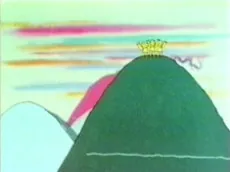
A lost recording of a 1961 Japanese choir singing an 1880 Neapolitan song about a mountain railway, accompanied only by shadow puppets. The simplicity is the point: no animation tricks, no narrative weight, just voices and shadows moving in time. What survives is a artifact of pure comfort, a reminder that sometimes the oldest songs travel furthest and arrive as something entirely new.
Funiculì funiculà, the Neapolitan song Luigi Denza composed in 1880 with words by Peppino Turco, gets a Japanese rendition in this single music short. The vocal group Duke Aces sang it on NHK's Minna no Uta in April 1961 as Tozandensha, meaning Mountain Railway, set to shadow play by the Kakashiza Shadow Play Theatre. That broadcast is thought to be lost today. In June 1970 the same program aired a boys and girls choir singing it under the original title.