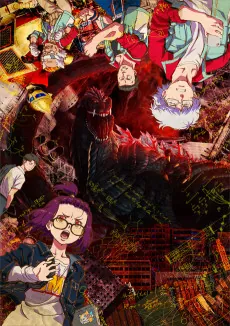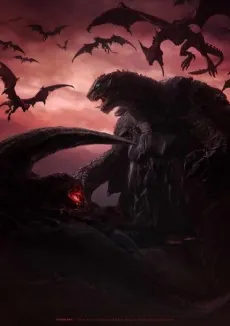
Gamera shows up broken and half-dead to save four kids who don't know what they're looking at, and that asymmetry, a monster fighting with everything it has while the real story is about friendship ending, is what makes this work. The animation is cheap enough that you notice it within five minutes, but by episode three you stop caring because you're watching children say goodbye to summer while a turtle fights for its life. It's Showa-era Gamera filtered through the specific ache of being twelve years old and knowing something permanent just happened.
In the summer of 1989, a group of sixth graders in Tokyo, among them Boko, Joe and Junichi, are enjoying their final summer vacation of elementary school when a monster called Gyaos suddenly attacks the city. Trapped among the ruins with Gyaos closing in, the kids see a giant turtle kaiju named Gamera appear before them. Though wounded, Gamera throws everything it has into the fight. That clash only opens their summer of kaiju, as Gamera goes on to face five different monsters, some of them giant creatures that eat humans. The six-episode ONA pairs monster battles with a story about friendship at the end of childhood.
WHERE TO WATCH
Streaming GAMERA -Rebirth- legally, as of the last catalog refresh. Availability changes by region.
Netflix