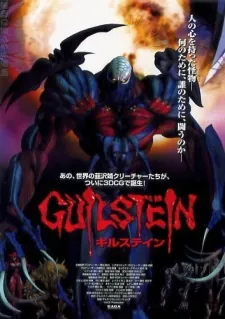
The monsters are the point, not the story. Guilstein throws you into a 2088 wasteland where creature design and raw combat choreography matter more than plot mechanics, and the early-2000s hybrid animation, rougher than it needed to be, somehow makes each fight feel heavier. This is late-night cult anime that knows exactly what it is: a showcase for grotesque biomechanical bodies colliding in a world where humans stopped being the dominant species.
In the year 2088, the world has fallen into a grim future where people have been turned into the Guilstein, beings that no longer hold a human soul. The theatrical film blends action, horror and science fiction and is rendered entirely in digital 3D animation. It adapts a manga by Tamaki Hisao, with character designs by creature figure artist Yasushi Nirasawa and script supervision by Monkey Punch, creator of Lupin III.