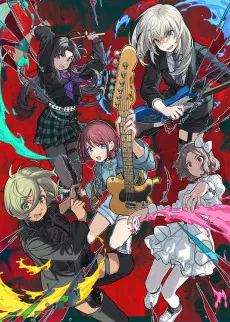
It grabs you in the first fifteen minutes, when Mahiru paints a jellyfish across a Shibuya wall at night and the show quietly admits that making something is the only way these girls can say anything true. Doga Kobo goes absurd with it: neon bleeding across wet pavement, color palettes that shift with Mahiru's mood, camera moves that treat a bedroom recording session like a stadium. Kano singing under an anonymous avatar because her idol past burned her, Kiui hiding behind a VTuber model, Mei building tracks that carry more feeling than she'll say out loud, four people who can only shine as "we" and know it. The mother-daughter tension in Mahiru's apartment lands harder than most full dramas manage. Fair warning: the back half never quite matches the swing of episode one, the pacing goes slack when it should escalate. Doesn't matter. You'll still get wrecked by a girl finally signing her own name to her art.
Four young women who feel a little out of step with the world meet on the late-night streets of Shibuya. Mahiru is an illustrator who abandoned art after classmates mocked her jellyfish mural as a child. Kano is a former idol with a difficult past, Kiui is a streamer and Vtuber, and Mei is a composer and pianist. When Kano admires Mahiru's work and asks her to design a mascot for a new music project, the four come together as JELEE, an anonymous artist group. They hope to make it a worldwide hit, but first each of them has to break free of her past. The series is a music-focused drama with a slice-of-life feel.
WHERE TO WATCH
Streaming Jellyfish Can’t Swim in the Night legally, as of the last catalog refresh. Availability changes by region.
HIDIVEYouTubeiQ