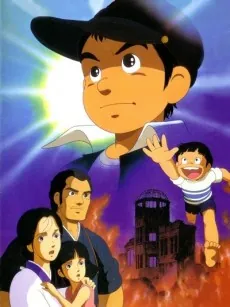
This one gets you by refusing to raise its voice. It opens like nothing: a junior high kid named Kazuki on a bullet train, summer vacation, an aunt's house in Hiroshima waiting at the other end. Then she starts talking about that morning, and the whole thing quietly rearranges itself around her account, no spectacle, no swelling score doing the work for you. The runtime is short and the animation is modest, but the weight lands because the OVA trusts a survivor's voice more than any explosion it could have drawn. What sticks is the lesson Kazuki actually walks away with, not just that peace matters but that it takes courage to lose, which is a strange and grown-up thing to hand a fourteen-year-old. Watch it once and the shinkansen ride home means something different.
Kazuki, a junior high school student, takes a bullet train to Hiroshima to spend his summer vacation with his aunt. Once he arrives, she tells him about the tragic events of the day the atomic bomb fell. Hearing from an aunt who had to overcome many hardships, Kazuki comes to understand the value of peace and learns the courage to lose. The story is a single-episode drama OVA from 1994.