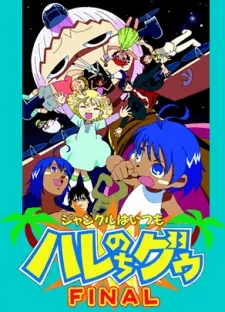
Guu's chaos follows them to the city, but the real comedy isn't slapstick, it's watching Haré navigate actual human connection for the first time, crush on Rita and all, while Guu warps reality around his sincerity. The show has no interest in plot momentum. It stops dead to let you sit with Haré wanting something he can't jungle-bully his way into. Everything fractures the moment real feelings enter the room, and that's where the humor lives: not in what happens, but in how badly these people want things they don't know how to ask for.
A video letter from the city shows Weda how sad and lonely her mother and Bel have been without her, so she takes her son Harè and Guu away from the jungle to stay in the city for a while. Harè schemes to get back home by grumbling that he is bored and lonely without his jungle friends. The plan misfires when Weda signs him up at a private school in the city instead. There he falls for a pretty girl named Rita at first sight, and Guu is determined to get in on the fun too. The OVA plays this city detour for comedy.