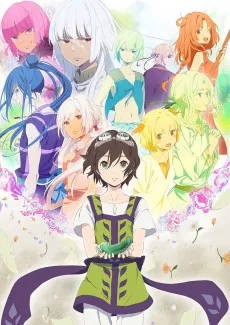
The world-building here is the real character. Two civilizations stacked vertically on a dying planet, each with their own logic and survival, and the snow itself becomes a living antagonist that shapes everything you see. Kaina and Liliha's collision forces you to choose sides before the show even tells you there are sides to pick. The visuals sell it all without needing exposition: environment storytelling that reminds you why Nausicaä still matters. The back half stumbles when the plot stops trusting its own premise and starts predicting itself, but by then you're already invested in whether these two worlds can breathe the same air. A show built for people who love discovering how a world actually works.
Snow covers the world as an endless, ever-rising sea, and humanity faces extinction as water grows scarce. The last livable land lies at the base of colossal Orbital Trees, while a few people cling to life in the canopy high above. Ririha, princess of Atland, rides an organic hot-air balloon up one of the trees to find a legendary sage said to know how to make water in abundance. The sage is not there. Instead she meets Kaina, one of the last men left in the canopy, who is eager to see the surface he believed was empty. As he helps her get home, Kaina learns of Atland's war with the technologically advanced nation of Valghia and the other perils below, and the escort proves harder than he expected. This Drama, Fantasy and Sci-Fi TV series runs 11 episodes.
WHERE TO WATCH
Streaming Kaina of the Great Snow Sea legally, as of the last catalog refresh. Availability changes by region.
CrunchyrollYouTubeBilibili TV