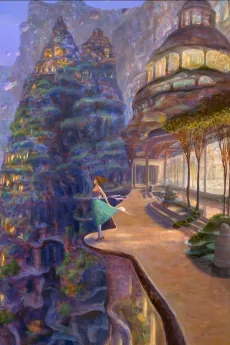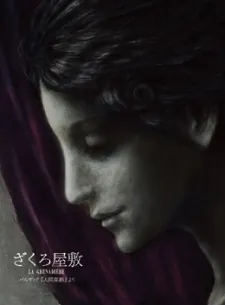
A single mother's quiet desperation in a 19th-century mansion unfolds across 70 tempera paintings, each one held long enough that you stop watching and start inhabiting the frame. The music doesn't score the story, it becomes the story, every note another layer of what she cannot say to her son. This is what happens when a painter and a composer agree to translate Balzac into pure atmosphere, and then actually do it.
A Japanese painter, Takeshi Fukazawa, renders Honoré de Balzac's novel La Grenadière in pictures for this single-episode OVA. More than seventy of his tempera paintings are set in motion and assembled by Koji Fukada into a Ga-nime, a work built from painted artwork. The story centers on a mother and her child in the nineteenth century, with music running through the whole piece. The paintings aim to capture the atmosphere of a mansion Balzac cherished and to stir the viewer's imagination and feelings.