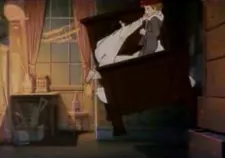
You're watching the ghost of what Miyazaki's hands could have made of a dream world before Hollywood told him no. The 1984 pilot moves like nothing else, fluid, strange, genuinely alien in how it treats physics and logic. This is archaeology. It's the only surviving proof that Studio Ghibli almost made American animation look like it was sleeping the whole time.
A young boy named Nemo falls asleep and finds himself transported to Slumberland, a magical realm where dreams take physical form. There, he meets the Princess of Slumberland, who becomes his guide through landscapes that shift between wonder and nightmare. Together they navigate floating islands, enchanted forests, and surreal architecture while being pursued by the Nightmare King, a dark force determined to corrupt the dream world and trap Nemo forever. This pilot exists at a fascinating crossroads between Western storybook animation and Japanese sensibilities. The animation is lush and detailed, with backgrounds that feel genuinely alive and unsettling in equal measure. Nemo himself is uncertain and sometimes afraid, which gives his journey real weight rather than the usual confident hero routine. What makes this special is watching the prototype of what could have been, before the full film took another direction. The pacing is slower, the mood more contemplative. If you appreciate animation that prioritizes atmosphere over constant action, or if you're curious about seeing early Ghibli influence on American production, this pilot offers something genuinely distinctive. It's a window into a specific moment in animation history when different traditions were still figuring out how to blend.