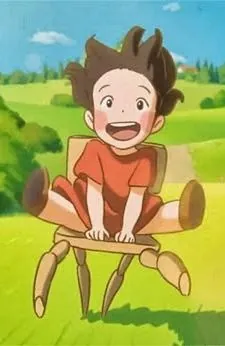
This is Miyazaki before he became Miyazaki, and you can feel him finding his voice in real time. The animation moves with a gentleness that shouldn't work on a 10-year-old orphan's story, but it does, because he's not interested in making you cry. He's interested in making you see her the way she learns to see herself: small, but not broken. The pilot ends before the story does, which stings, but what's here is complete in the only way that matters, you've watched a child decide to live.
A ten-year-old orphan girl is taken in by a family, and the one-episode drama special builds its plot from that adoption. The story is fairly intricate and leans toward sweeping melodrama. It adapts a well-liked 1963 shoujo manga by Tetsuya Chiba, whose work had a more mature, sophisticated tone than much of the manga of its era. The pilot is best known as Hayao Miyazaki's first project as sole director, after he shared directing duties with Takahata on later episodes of the 1971-72 Lupin III series.