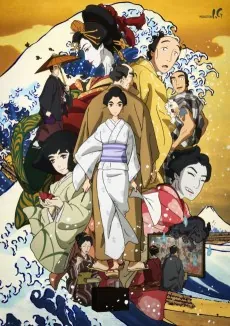
The camera watches Hokusai's hands move across paper the way a lover watches someone sleep, unhurried, almost reverent. This is a film about the invisible labor of creation, the constant negotiation between vision and material, rendered in animation so alive it breathes. You watch a master artist in his chaos, surrounded by failure and accident and stubborn refusal to stop, and it becomes the most intimate portrait of what it costs to make something that matters.
Edo, 1814. The crowded city is home to samurai, merchants, courtesans and artists, and perhaps to things from beyond the ordinary world. Tetsuzo, a celebrated painter in his mid-fifties with clients across Japan, works amid the clutter of his home studio on pieces as vast as an enormous Bodhidharma and as tiny as two sparrows on a single grain of rice. He is quick to anger, sharply sarcastic and uninterested in money or drink. His outspoken 23-year-old daughter O-Ei shares both his gift and his stubbornness, often painting in his place without credit, and her work is powerful enough to cause trouble. Tetsuzo will later be known to the world as Katsushika Hokusai. The drama with supernatural touches centers on O-Ei, a free-spirited woman in the shadow of her famous father, and unfolds across the turning seasons.
WHERE TO WATCH
Streaming Miss Hokusai legally, as of the last catalog refresh. Availability changes by region.
CrunchyrollNetflix