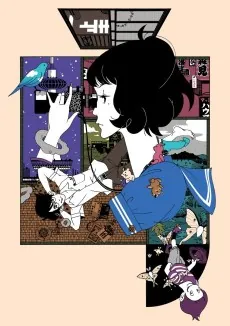
Biwa sees the future of everyone she loves, watches it happen anyway, and learns there's no difference between witnessing and causing it. The show moves slowly through court intrigue and family fracture because it knows the real tragedy isn't the war, it's the quiet moment before each person stops fighting who they are. A historical epic that treats its source material like a funeral rite, not a battle story.
Japan in the late Heian period is ruled in practice by the Taira clan, known as the Heike, whose power is nearing its height. A young girl with an odd eye that sees the future offends the clan, and her father is killed for it. Now calling herself Biwa, she crosses paths with Taira no Shigemori, eldest son of the clan leader, who can see the spirits of the dead. She warns him that the Heike will soon fall. Learning of the wrong done to her, Shigemori takes her in instead of letting her be killed. Tension builds toward war, and he hopes to avert his family's ruin, but Biwa hesitates to share what she sees as she settles into a life of both joy and grief. The drama draws on a novel by Furukawa Hideo that retells the medieval epic of the clan's rise and fall.
WHERE TO WATCH
Streaming The Heike Story legally, as of the last catalog refresh. Availability changes by region.
Crunchyroll