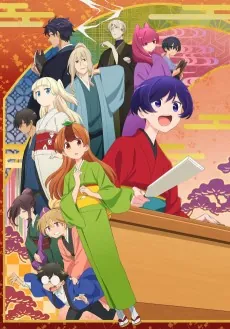
A tanuki born too late to trick anyone learns that the real magic was always in the story itself. Mameda's desperation to matter in a world that doesn't believe in her kind anymore becomes something quieter and deeper: watching her discover that making someone laugh or cry through rakugo is just as real as any supernatural prank ever was. The show moves at the speed of conversation over tea, which means you feel every small moment Mameda stops performing and just exists with Bunko.
Mameda is a tanuki born into the wrong era. Her kind once loved shapeshifting and fooling humans, but by the start of the Taisho period, modern technology has made those tricks useless. Determined to follow her father's example, she heads to Osaka to deceive people, fails completely, and ends up chased by an angry crowd. Hiding in a theater, she watches a rakugo performance by the master Bunko Daikokutei and is captivated by the vivid scenes his storytelling conjures. Mameda sees her answer: if she cannot bewitch people with tanuki magic, perhaps she can enchant them through tales instead. The problem is convincing the no-nonsense Bunko, who is reluctant to take a disciple, to accept her as an apprentice. Once her persistence wins him over, she juggles a taiko apprenticeship, work at the theater and memorizing stories in a comedic fantasy slice-of-life.
WHERE TO WATCH
Streaming My Master Has No Tail legally, as of the last catalog refresh. Availability changes by region.
HIDIVEYouTubeBilibili TV