It throws Jeanne Kaguya d'Arc, Oda Nobunaga, Leonardo da Vinci and Julius Caesar onto two warring planets and dares you to keep a straight face, then hands Nobunaga a giant robot literally named The Fool and wins you over anyway. Shoji Kawamori's fingerprints are all over it: the War Armor silhouettes, the Dragon Pulse mysticism, the sense that someone drew every regalia design first and worried about the plot later. The tarot naming running under the episodes tells you exactly how seriously it takes its own destiny talk, and the twists actually land harder than the setup deserves. Yes, the narrative goes sideways and never fully knits itself back together, which is why half the audience bails by the second cour. The other half stays because Satelight's backgrounds and Jeanne's visions are doing things no sane production committee would greenlight now. If Star Driver's swagger and Sengoku Basara's absurdity sound like a compliment, you already know.
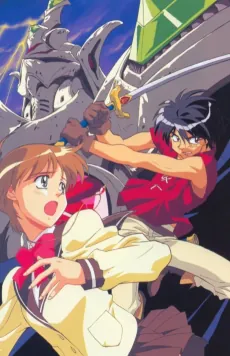
Long ago, a heavenly link called the Dragon Pulse joined two worlds, the Western Planet and the Eastern Planet. The civilization that flourished then survives only as legend, and both planets are locked in war without end. Lost relics of advanced technology, the sacred treasures, could reshape the balance of power, but only a girl branded a heretic knows about them. Jeanne Kaguya d'Arc of the West foresees the coming of a savior, and she sets out for the Eastern Planet alongside the polymath Leonardo da Vinci. There she meets Oda Nobunaga, a feudal lord's son mocked as the Fool, who wants the strength to remake his war-torn world. Their encounter launches a sci-fi mecha story of prophecy and combat machines.