A family doesn't change because one big thing happens. It changes because a thousand small things happen at once, and nobody notices until the year is already gone. Shouwa Monogatari sits inside one ordinary year in one ordinary household and watches how the Olympics, a job promotion, a daughter growing up, and a mother's quiet exhaustion all collide without ever making a sound. This is not a movie about historical significance. It's about the people for whom 1964 was just 1964, and how they tried to keep the house standing while the world outside was remaking itself. If you've ever felt time moving faster than you could understand, this movie knows exactly what that costs.
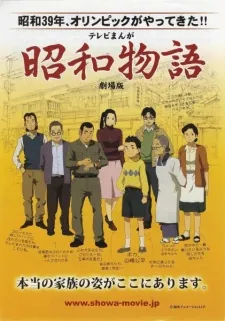
Shouwa Monogatari is a drama film set in Tokyo in Showa 39, or 1964, the year the city hosted the Summer Olympics. It centers on the Yamazaki family: father Yuuzou, mother Kanoko, grandmother Yoshi, university student Taichi, high schooler Yuuko and primary schooler Kouhei. The household is unsettled and at odds with itself, but the events and celebrations surrounding the Tokyo Olympics draw its members back together.