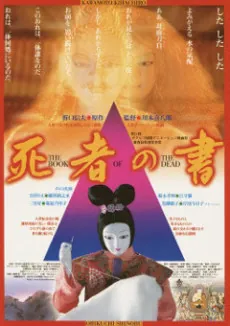
This one slows your pulse down until you notice your own breathing. Kihachiro Kawamoto carves faces that barely move, so when Iratsume finally turns her head or Prince Otsu's ghost pulls itself back together out of the dark, the smallest gesture lands like a gong. It is Nara-period Japan rendered in cloth and wood and candlelight, and the film trusts you to sit with long silences, rain on a temple roof, a woman copying sutras until the brush becomes a trance. Then the ending arrives, all lotus thread and woven color, and the thing you thought was a quiet ghost story turns out to be about grief finding a shape it can live in. No spectacle, no swelling score telling you when to feel. Just a puppet's still face and the sun going down behind the mountain, and you sitting there wrecked by it.
In Nara period Japan, where Buddhism has newly arrived from China, a young noblewoman named Iratsume devotes herself to copying sutras by hand. After finishing a thousand pages, she glimpses a glowing figure above a far mountain and falls into a trance. Her body moves of its own accord, carrying her to a temple that women are forbidden to enter. There she meets the restless spirit of Prince Otsu, put to death years earlier in a court intrigue. The ghost mistakes Iratsume for one of her ancestors, a woman whose face was the last thing he saw before he died. That memory keeps his soul from finding peace. Soon he comes to her chamber each night, and a contest of wills begins between the devout young woman and the ghostly prince.