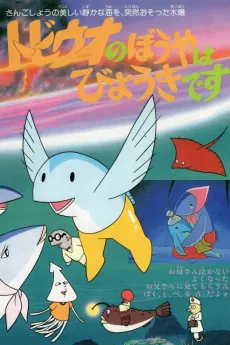
A flying fish that can't fly anymore. That's the entire story, and it breaks you because it's not metaphor, it's what actually happened to real fishermen, told through the gentlest possible lens. The film doesn't rage or explain or demand your anger; it just shows you something small and alive losing itself to poison that was never supposed to reach it. By the end you're crying over a picture book, which is exactly when you realize what the film did to you.
A flying fish living in the sea loses the power to fly. His body begins to fail him, poisoned by radioactive ash that settles over the ocean around his home. The fallout harms other marine life as well, and the film pictures these creatures as talking fish who wear human clothing. The story comes from a picture book of the same name and grew out of a real disaster. On March 1, 1954, a United States hydrogen bomb test in Operation Castle showered ash on the crew of the Japanese fishing boat Daigo Fukuryuu Maru, and the men fell ill from radiation. The film turns that event into a fantasy drama told through the sea creatures it touched.