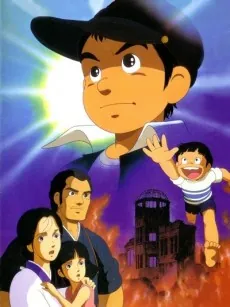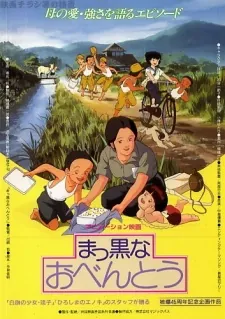
A mother finds her son's remains next to a charred lunchbox. That detail carries the entire weight of Hiroshima into one unbearable image. The film refuses to look away from what happens when ordinary love meets historical catastrophe, building its horror not through spectacle but through the specific, mundane act of a mother packing her child's breakfast. By the end, you understand that some stories don't need to be big to destroy you. This movie is built for people who can sit with grief without needing it explained. It will stay with you.
August 6th, 1945. Shigeru leaves for his job as a building excavator in Hiroshima, carrying a lunchbox his mother prepared that morning. He never comes home. After the atomic bomb falls, his mother eventually finds his remains, with the bento box beside them, burned completely black. This drama film approaches the bombing through a single object: a mother's last gift to her son. It adapts the book Makkuro na Obentou, written by Kodama Tatsuharu and illustrated by Kitajima Shinpei, and the charred lunchbox at the heart of the story is on display at the Hiroshima Peace Memorial Museum.