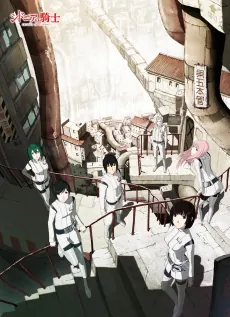
The city doesn't feel like a setting, it feels like a living thing that despises you. Killy moves through it like a ghost executing a contract he accepted centuries ago, the only sound his footsteps and the Graviton Gun's roar, and the film knows that atmosphere and dread work better than plot. The CGI aesthetic divides rooms, but the ones who get it understand: this is what alienation looks like when rendered in polygons and concrete.
Humanity has been reduced to scattered survivors in the endless levels of a city that keeps building itself in every direction. A long-ago infection threw the automated systems into disorder, and a defense system called the Safeguard now hunts down any human it detects. The Electro-Fishers, a small enclave in one corner of the city, face extinction as their food runs short and the Safeguard remains a constant threat. When Zuru goes out searching for food, an observation tower senses her and calls in a pack of Safeguard units. Her companions fall and every escape is blocked until a wanderer named Killy suddenly arrives. He is searching for the Net Terminal Genes, a trait that could let humans regain control of their world. The film is bleak sci-fi horror with action and psychological tension.
WHERE TO WATCH
Streaming BLAME! legally, as of the last catalog refresh. Availability changes by region.
Netflix