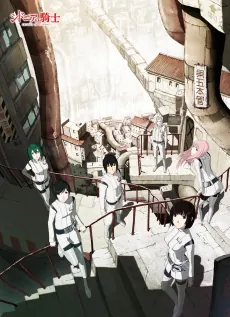
The first episode ends with a choice that redefines everything you thought you were watching. Kidou and Ilie's relationship doesn't feel like a plot device, it's the actual weight the show carries, and every decision spirals from what they mean to each other. The 3D will alienate half the people who start it, but the other half watch a man trying to save someone from becoming a monster when he's already halfway there himself.
A mysterious insect plague wiped out two thirds of humanity three decades ago, turning infected people into half-human hybrids that quickly grow into enormous monsters. Kidou is an exterminator, one of the hunters who track down these creatures, called Cagasters, while they are still partly human and easiest to kill. The job demands emotional distance: exterminators keep themselves apart from ordinary people. In 2125, at the desert's edge near the insects' cage, Kidou comes upon a man dying of insect wounds. The man leaves his daughter, Ilie, in Kidou's care and asks him to find her mother. As he takes on the task, Kidou begins to sense that his feelings and humanity are not as deeply buried as he thought. Adapted from a seinen manga, the ONA blends sci-fi action with drama.
WHERE TO WATCH
Streaming Cagaster of an Insect Cage legally, as of the last catalog refresh. Availability changes by region.
Netflix