Masaru doesn't want to be a hero, he wants to win, and that friction between his fists and actual responsibility is the entire show. The first thirteen episodes are genuinely rough, but once the real plot arrives, the soundtrack becomes a character itself, and you realize this was building something colder and stranger than any other Digimon series dared. By the finale, you understand why they cast a street fighter as the protagonist: some truths about growing up can only be learned through losing.
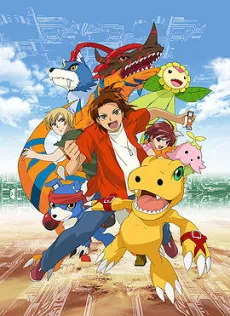
Masaru is a second-year junior high student and an undefeated street fighter who settles things with his fists, until a runaway Digimon named Agumon crashes into his life. The two start out trading blows and end up best friends. When an evil Digimon appears, Masaru and Agumon take it down with their DNA Charge. That's when DATS recruits him: a secret government organization that deals with Digimon slipping through to the human world and sends them back to the Digital World. Suddenly Masaru's part of a team. Kind-hearted Yoshino and her partner Lalamon, young genius Touma and his partner Gaomon, and Ikuto join him on missions against dangerous Digimon. As they look into why so many Digimon are crossing over, a darker truth starts to come to light, and Masaru has to learn what teamwork really means.