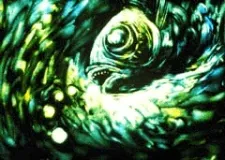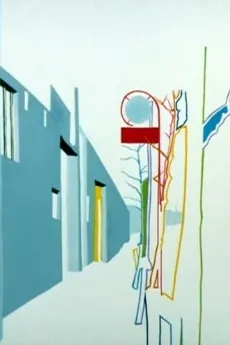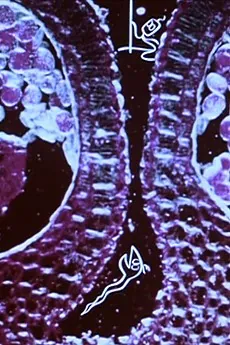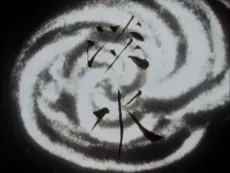
Yamamura's animation doesn't illustrate ideas, it becomes the thinking itself. Every frame is a deliberate choice about what consciousness looks like when you strip away noise. The philosophical weight isn't explained to you; it's embedded in how the images move, how they breathe, how they refuse to move when stillness matters more. This is a film that trusts you to feel the argument instead of hearing it. Most animation serves story. FreshWater serves something deeper, a visual meditation on existence that only animation could pull off this way.
A man stands alone beside a vast body of water, caught between the familiar and the unknown. What begins as a simple encounter with freshwater becomes a descent into something far more unsettling. Reality bends and warps around him as he confronts questions that have no easy answers: What separates the self from the other? Where does the boundary between observer and observed truly lie? The film moves with deliberate, hypnotic pacing, pulling viewers into a dreamlike state where logic dissolves. Yamamura constructs a psychological landscape that mirrors the mind's own peculiar architecture, where sensations become unreliable and perception itself becomes the battleground. Nothing is quite as it seems, and every moment carries an undertone of quiet dread. This is cinema for those who prefer discomfort to comfort, who find meaning in the spaces between scenes. It rewards patience and tolerates ambiguity. The experience lingers long after the screen fades black, leaving questions about consciousness and existence that refuse to settle.