The second film stops trying to explain everything and lets you sit in the weight of what humanity has become to survive. Mechagodzilla doesn't arrive as spectacle, it arrives as the moment the story forces you to ask if saving the world means losing what made it worth saving. That final battle burns through the screen because by then you understand the cost isn't measured in city blocks.
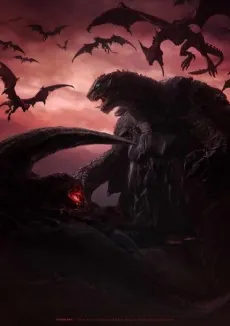
Twenty thousand years after Godzilla forced humanity off Earth, Haruo Sakaki's troops have finally killed the monster at a heavy price. But it was not the only one: another Godzilla still roams the planet. Badly hurt, Haruo wakes in the home of a young girl from the Houtua, a tribe that looks strikingly human and has adapted to Earth's altered climate. With supplies nearly gone, the surviving special forces must decide whether to give up their mission and their homeworld or keep fighting against long odds. The Bilusaludo aliens then find what remains of Mechagodzilla, their weapon built to fight Godzilla, and the group heads for the old facility. Even so, Godzilla has spent the ages evolving to crush any challenger in this action-driven mecha sci-fi film.
WHERE TO WATCH
Streaming Godzilla: City on the Edge of Battle legally, as of the last catalog refresh. Availability changes by region.
Netflix