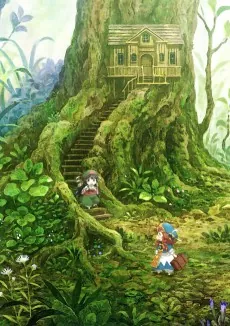
You're watching the moment Japanese animation decided it could tell stories on television, not just fill time between live-action programs. Three separate worlds unfold in a single hour, each one proving that anime didn't need to be spectacular to be unforgettable, just honest. "The Third Plate" cuts deeper than most horror, "Oppel and the Elephant" moves like a fable that knows its own weight, "Sleepy Town" settles into your chest like a memory you didn't know you had. This is archaeology. Most people have no idea it exists. That's the real crime.
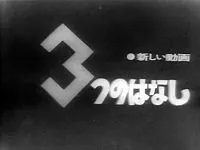
Three separate tales make up this 1960 special, which ranks among the first domestic anime ever shown on Japanese television. The first is "The Third Plate," based on a story by Hirosuke Hamada. The second is "Oppel and the Elephant," drawn from the work of Kenji Miyazawa. The third is "Sleepy Town," from a tale by Mimei Ogawa. Together they form a single fantasy anthology episode from the earliest days of anime on TV.