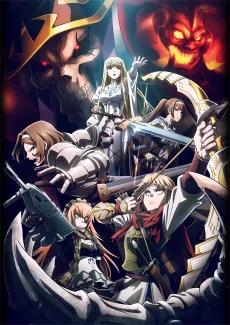
Ainz moves through a kingdom that worships and fears him in equal measure, and the movie knows the real horror isn't his power, it's watching him think like a player in a world full of people. The animation snaps awake during moments that matter: a sword swing that costs lives, a spell that reshapes what's possible, political maneuvering that unfolds with the weight of consequence. Neia and Remedios aren't side characters holding the frame; they're the moral center the Sorcerer King cannot be, and the film trusts you to feel that gap. The pacing stumbles early, rushing through setup that needed more air, but once the kingdom's actual crisis hits, the soundtrack and direction lock in completely, this is Overlord remembering why the premise terrifies people in the first place.
Ains Ooal Gown, the undead Sorcerer King, receives a plea for aid. He began as Momonga, a longtime player of an MMORPG who was left stranded inside its world. The Sacred Kingdom lived in peace for years behind a vast wall, but that peace shatters when the Demon Emperor Jaldabaoth appears leading an alliance of demi-humans. Paladin grandmaster Remedios and high priestess Kelart strike back and are overwhelmed, leaving the country close to collapse. Remedios sets out with her order and her subordinate Neia to seek help from the Sorcerer Kingdom, a land ruled by the undead and loathed by her people. The Slane Theocracy, afraid the invasion will reach its own lands, also turns to this enemy for aid, and Ains brings his undead army into the war. This theatrical action fantasy film follows on from Overlord IV.
WHERE TO WATCH
Streaming OVERLORD: The Sacred Kingdom legally, as of the last catalog refresh. Availability changes by region.
CrunchyrollNetflix