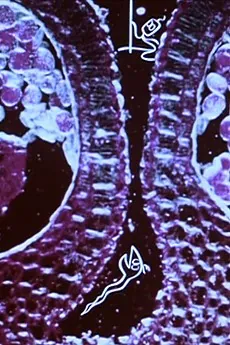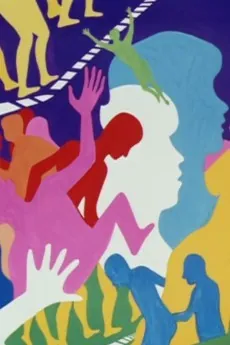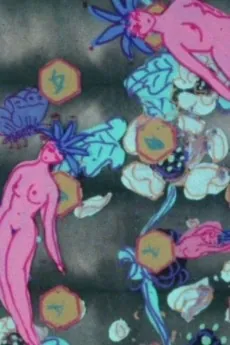
Kanji doesn't just become creatures here, it becomes proof that meaning itself is alive. The animation technique forces you to watch the act of transformation happen on paper, in real time, which means you're seeing the poem reshape itself instead of just reading about it. This is what happens when someone treats a single artistic gesture as a complete story.
Kanji characters from a classical Japanese poem, the Iroha uta, begin to shift and transform, their rigid forms dissolving into living creatures that move with an almost dreamlike fluidity. Some of these characters twist into various beings, rippling across the screen as if caught between states. The film treats language as something malleable, where the written word sheds its static nature and takes on moving forms. Hand-drawn in marker and animex on washi paper and cel sheets, the visuals carry a distinctly handmade texture. The short suits viewers drawn to abstract, experimental animation with a psychological bent.