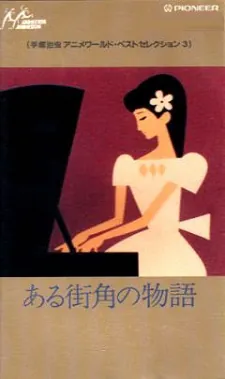
A street corner becomes a theater of small tragedies without a single word spoken. Tezuka made this to prove he didn't need dialogue or plot machinery, just a poster, a girl, a moth, and enough visual rhythm to break you. The ending refuses to comfort you with clarity, leaving you certain only that something irreplaceable was lost.
A street corner becomes a stage for interconnected lives that shouldn't matter but somehow do. A girl clutches her teddy bear while a moth spirals around a lamppost, drawn to its glow. A poster watches from the wall. Each figure carries weight, carries wanting, carries a story that unfolds in fragments and feeling rather than plot. War arrives like an uninvited guest, and the delicate balance shatters. What begins as quiet observation transforms into something darker, something that builds toward an ending that doesn't look away. The film moves through emotion more than narrative, letting animation itself become the language where words would fail. This is cinema made by someone refusing to compromise, choosing instead to find profound humanity in the overlooked corners of the world. A moth chasing light becomes a meditation on yearning. A teddy bear becomes an anchor against chaos. Even a poster pasted to a wall holds dignity and tragedy. The result is tender and strange and entirely uninterested in giving easy answers.