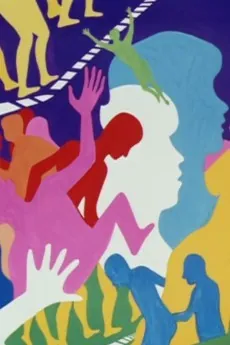
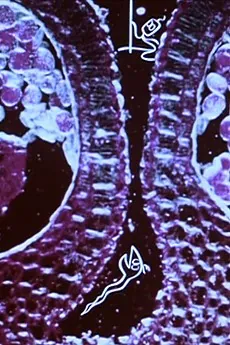
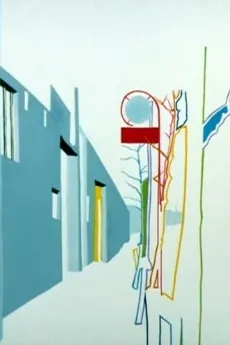
Nobody talks about this one. A 1971 independent film that moves like a meditation on numbness, where the camera holds on small gestures the way a person stares at nothing when everything has already broken. Suzuki builds a world so quietly that you forget you're watching animation at all, then realizes you've been inside someone's collapse the entire time. The pacing will kill you if you're waiting for something to happen. For people who want cinema that whispers instead of screams, Ten is patient enough to let you feel what silence actually weighs.
A single point appears on a blank screen. Then another. And another. What begins as scattered marks gradually transforms into something more deliberate, more purposeful. The animation strips away the notion that meaning requires narrative or dialogue, instead building an entire psychological landscape from the simplest visual element: the dot. As shapes accumulate and shift, patterns emerge from chaos. Forms suggest themselves, then dissolve back into abstraction. The viewer becomes complicit in this act of creation, actively constructing meaning from minimal information. Each frame poses a question about perception itself: what we see versus what we interpret, what is intentional versus what we project onto emptiness. The film operates in silence, forcing total attention on the visual progression. What might seem meditative to one viewer feels oppressive to another. Abstraction becomes either liberation or anxiety depending on your tolerance for ambiguity. Ten refuses easy answers, instead presenting a space where psychology meets pure aesthetics, where a simple point becomes a doorway into the viewer's own mind.