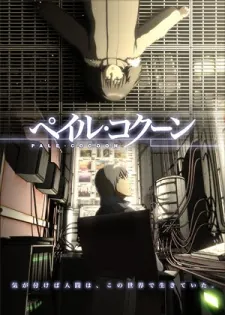
The world doesn't end in fire or ice here; it ends in the suffocation of concrete and indifference, and the show finds beauty in the spaces between. Three girls moving through a city that treats them as invisible debris, finding small rebellions in fashion and art because that's all that's left when the system stops seeing you. Urahara looks like nothing else on TV, a visual fever dream built from collage and spray paint, where style becomes the only honest language left. The pacing is deliberately strange, asking you to sit with discomfort instead of resolve it, which separates people who want story from people who want experience. A show for anyone who has felt erased by the machine and found power in refusing to disappear into it.
Urahara presents a world where the boundary between the organic and the artificial has dissolved into something unsettling and beautiful. Modern civilization spreads like a living organism across the landscape, cities multiplying and consuming space with relentless momentum. Three protagonists navigate this bacterial sprawl, searching for pockets of genuine wonder in a reality that feels simultaneously hyper-technological and decomposing. The story asks what remains human when everything around you operates on inhuman scales. Amidst towering structures and incomprehensible urban density, the characters hunt for moments of authentic beauty and connection, knowing these glimpses might be fleeting or illusory. The visual language shifts between meticulous detail and dreamlike abstraction, mirroring the gap between what the world appears to be and what it actually contains. Urahara demands active viewing. It rewards patience with sequences of genuine visual invention and emotional resonance that cut through the strangeness. This is for viewers willing to sit with discomfort and confusion, trusting that the film's peculiar aesthetic and philosophical questions will eventually resolve into something meaningful.