The world of Neo Hong Kong feels like it exists inside a fever dream that's halfway through a sentence it forgot how to finish. Digital viruses don't just threaten the body, they threaten identity itself, and the show treats that dissolution with the same cold precision it gives to a gunfight in a neon-soaked street. It demands you piece together what's happening from half-finished thoughts and visuals that contradict the narration, then halfway through admits it doesn't have all the answers either. That's not a flaw. That's the point. You're watching a world where meaning itself has become corrupted, contaminated, unstable. The show costs you certainty to give you something most anime won't even attempt: genuine unease.
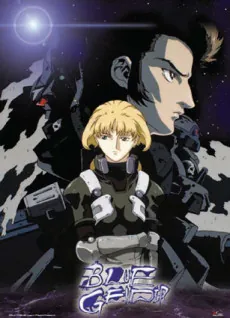
In Neo Hong Kong in 2097, genetic engineering and cybernetics have blended people and machines, producing enhanced humans and thinking computers that run on biological software. That same fusion leaves both open to digital viruses able to seize control of whoever or whatever they infect. STAND, an elite law enforcement unit, is the final safeguard, and its members wear armored cybernetic suits called Variable Gears to fight infected war machines. When a prototype armored gear catches a new virus during its debut, STAND must deal with the rampaging machine. At the same moment a mysterious young man named Serge arrives, determined to go after STAND's leader, Raven. Intrigued by his potential, Raven has Serge fitted with a Variable Gear without his knowledge, which awakens hidden combat skills that let him defeat the prototype. Afterward Serge is asked to join STAND, while questions linger about his past and his link to the Incubator, a self-aware orbital station that aims to replace humanity with its infected offspring. The result is a sci-fi mecha action series built around armored battles against virus-driven machines.