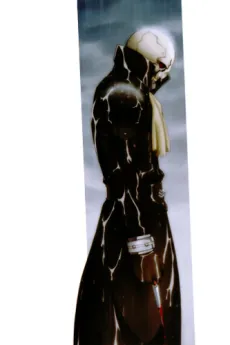
This one gets under your skin because Jiro isn't a hero learning to feel, he's a machine that can't stop feeling and hates it. The conscience circuit came out incomplete, which is why Kikaider's body is split down the middle, half blue, half red, half of it transparent so you can watch the gears turn while he agonizes. Dr. Gill only has to put that flute to his lips and Jiro drops, convulsing, because the part of him that was supposed to say no was never finished. Then there's Hakaider, the black android built to end him, walking around with Dr. Komyoji's brain inside his skull, and the show refuses to let that be a clean twist. Tensai Okamura keeps the palette bruised and the pace slow, more roadside melancholy than tokusatsu punch-up, all thirteen episodes tightening instead of padding. Jiro with a guitar and nowhere to be is the image that stays.
Jiro is a humanoid robot built by the brilliant robotics professor Dr. Komyoji, and he can transform into the hero Kikaider. His creator fitted him with a conscience circuit that lets him simulate real emotions and tell right from wrong. His mission is to protect the professor's children, Masaru and Mitsuko. Standing against him is the evil Dr. Gil, who commands an army of androids, dreams of ruling the world and wants Jiro to join his forces. This 13-episode mecha action drama reworks the original live-action tokusatsu series in a darker tone, adding and expanding emotional conflicts for Kikaider and the characters around him.