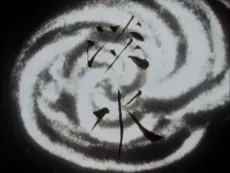
Stroboscopic light doesn't tell a story, it becomes one. Tanaami built this entire film around flicker as a language instead of an effect, which means watching it is less like viewing animation and more like having your perception deliberately rewired for sixty minutes. You either surrender to the rhythm or you don't, and the film has no interest in convincing you to choose surrender.
FLICKER LOVE NO.1 is an experimental flicker film by Tanaami, built around stroboscopic effects. His interest in strobe imagery took hold after he watched the Velvet Underground play during Andy Warhol's Exploding Plastic Inevitables in New York. He intended the film to open a longer series of flicker works, but no further entries were ever produced, so this remains the single piece from that plan. The result is a psychological experiment in flashing light.