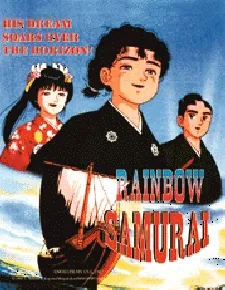
Two men on opposite sides of a collision neither can stop. One is building the future with a scalpel. The other is dying for a past that will not wait. The show spends 25 episodes proving both of them are right, and neither of them wins. This is what Tezuka made when he stopped trying to save the world and started asking what it costs to live inside real history. By the end, you understand why Tezuka needed to tell his great-grandfather's story, not just as legacy, but as evidence that some people spend their whole lives losing the only fight that matters to them.
In 1855 Edo, two young men walk very different paths as their nation stands on the edge of transformation. Manjiro is a low-ranking samurai bound by duty and honor, his sword arm sharp and his moral compass unwavering. Ryoan chases a different calling: he trains in Western medicine and dreams of becoming a doctor, though he also has a carefree streak and an eye for women. Manjiro, meanwhile, strives to uphold the old traditions of his class. Set against real historical upheaval, this drama shows two contrasting personalities coming of age as the Tokugawa period draws to its turbulent close. The story draws on real people, and Ryoan was the great-grandfather of Tezuka.