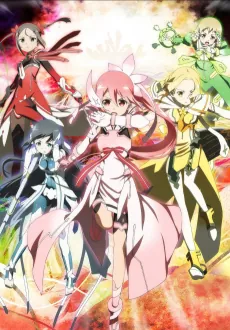
Homura refuses to accept the ending Madoka chose, so she tears reality apart to get her back. The movie animates this descent into madness through kaleidoscopic visual tricks, childlike sketches warping into gothic nightmares, a visual language that breaks the rules to match a mind breaking its own logic. By the ending, you realize the film itself has been lying to you the entire time, and the girl you thought you were rooting for has become something far more complicated and terrifying than any witch.
Madoka Kaname gave up her very existence to free every magical girl from a cruel fate, and Homura Akemi, who could not keep her promise to her, keeps fighting in the world Madoka left behind. In Mitakihara the girls now live happy, peaceful days, fighting off evil only now and then. Yet something feels wrong. The others notice nothing, but Homura suspects there is more going on, because someone who should not exist is taking part in their routines. Driven by an undying love, she fights selfishly and desperately to uncover the painful truth. The film is a psychological, despair-soaked magical girl thriller that concludes the story of five magical girls.