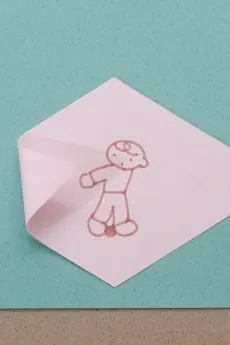
A single object folds through time and space in ways that rewire how you think about dimension itself. The animation doesn't illustrate a story, it IS the story, each crease and overlap a philosophical argument made physical. Most viewers miss it because nothing happens in the way they expect things to happen. What's left is a short film that operates on pure visual logic, where every transformation asks what changes when you alter perspective instead of plot. This is the kind of work that disappears from discourse because it refuses to meet you halfway. Revision: A single object folds through time and space in ways that rewire how you think about dimension itself. The animation doesn't illustrate a story, it IS the story, each crease and overlap a philosophical argument made physical. Most viewers miss it because nothing happens in the way they expect things to happen. What's left is a short film that operates on pure visual logic, where every transformation asks what changes when you alter perspective instead of plot. This demands active viewing; passivity gets you nothing. It's the kind of work that disappears from discourse because it refuses to meet you halfway. A single object folds through time and space in ways that rewire how you think about dimension itself. The animation doesn't illustrate a story, it IS the story, each crease and overlap a philosophical argument made physical. Most viewers miss it because
A hand carefully arranges layers of precisely cut material, each piece positioned with intention. When these sections shift along invisible axes, they reveal something unexpected: the flat laminate bends, folds, and transforms into three-dimensional forms that shouldn't be possible. What begins as a meditation on craft becomes something stranger, more philosophical. This experimental film presents a visual puzzle. Objects materialize and dissolve through deliberate manipulation of overlapping planes. Time and space collapse into one another as the artist's hands guide the metamorphosis. There's no dialogue, no conventional narrative arc. Instead, the piece speaks through pure visual language: the relationship between structure and transformation, between intention and accident. It's hypnotic and disorienting in equal measure. The short duration allows the concept to hit hard without overstaying its welcome. Viewers drawn to abstract cinema, kinetic sculpture, and the meditative quality of watching skilled hands work will find something singular here. This is animation stripped down to its essential question: what happens when we change how we see spatial relationships?