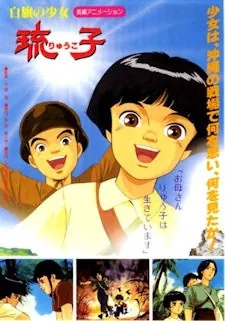
A teenage girl dies in a car accident. The film doesn't move past that moment, it lives inside it, stretching one instant of impact into a full meditation on how a life just stops. There is no resurrection, no supernatural softening, no neat closure. Ryuko's death is ordinary and absolute, and the film stays faithful to that cruelty instead of reaching for meaning. It's built for viewers who can sit with unbearable things without needing a story to make sense of them. The cost is that nothing in you will feel settled when it ends.
In 1945, American troops come ashore on Okinawa, and Japanese forces answer with guerrilla warfare. Young Ryuko has to leave her grandparents behind and run with her mother and little sister, but her mother and sister are eventually killed. Alone, Ryuko keeps going across the war-ravaged island. She finally reaches safety in caves held by Japanese soldiers, only to see the troops kill themselves with hand grenades. The film adapts a children's book that was inspired by real American footage of Tomiko Higa, an Okinawan girl, waving a white flag during the island's surrender. The drama follows the war on Okinawa through one child's experience.